Packaging Blog: Packaging Industry News

Packaging news, ideas, rants and raves, and inside deals. Whether you are an insider in the packaging industry, concerned about the environmental or economic impact of packaging, or interested in one of the largest industries worldwide the Packaging Blog is for you!

Saturday, February 17, 2007

Reduced packaging helps the National Parks

Sometimes small changes in consumer behavior can make huge changes to the environment. The revolution in digital photography has made a huge change in packaging.

I just read a fascinating observation on how outdoor digital photography in National Parks has actually reduced how much litter from empty film canisters and photographic film packaging is actually creating cleaner environments in our recreational areas.

Reduced packaging helps the National Parks

The real question now is what your company is doing to reduce the environmental impact of excessive packaging or what creative innovations that you are using in your packaging strategy so that your products and company has less of a negative impact on the environment, improved customer perception of your company and products, and maybe even some more money on your bottom line.

Tell us what you have done and maybe your story will appear here or in our other syndicated media outlets.

Send your environmental success stories to: whatwearedoing at packagingblog.com.

Labels: , , , ,

Wednesday, November 22, 2006

Plastic and glass packaging definitions

Experienced and rookie packaging professionals will enjoy the plastic and glass definitions page and compatibility information I found while surfing packaging sites today.

Since plastic bottles and glass bottles are used in packaging of all types it helps to have this information at your fingertips.

Don’t know what Types I, Type II, and Type III glass containers can be used for? Go to the bottle definition page.

Labels: , , , ,

Sunday, October 09, 2005

AptarGroup Acquires Packaging Manufacturer MBF

One of the leading US Packaging manufacturers AptarGroup Inc has acquired a French packaging components maker MBF Development for about $43 million cash.

As part of the deal, AptarGroup whose 2004 sales topped $1.3 billion will assume $10 million in debt to buy out MBF Development whose yearly earnings are around $52 million.

AptarGroup, with 2004 sales of about $1.3 billion, supplies dispensing products such as finger tip sprayer pumps, dispensing pumps, treatment pumps, fragrance pumps, and foaming dispensers servicing the personal care, cosmetic, fragrance, food and pharmaceutical markets.

Labels: , , ,

Friday, October 07, 2005

Oxygen Scavenging PET Bottles and Jars

With advent of an improved oxygen-scavenging barrier that is undergoing testing right now, PET will now be able to take and even larger sector of ridged packaging from bottles and jars.

PET is by far one of the fastest growing segments of the beverage bottling industry, but has also made huge inroads in the cosmetic and personal care and food industry. Much of its rapid acceptable into the market is due to the fact that PET bottles and jars are not only shatterproof and recyclable now (see PET recycling increases for 2004 on Packaging Blog), they are as cosmetically appealing as glass - without the weight.

One of the key negative attributes of PET Bottles and other PET packaging containers is that fact that PET does a poor job in keeping oxygen from permeating the container and reacting with whatever is inside. Oxygen reacting with the fill of a container can affect the flavor of foods and drinks, the color and fragrance of a fill and it can dramatically affect the shelf life of some products as well.

Constar International has worked hard to beat this problem and is now on its third solution DiamondClear which when blended with monolayer PET, binds oxygen and stops the negative effects of oxygen on the fill.

The 2 prior methods Constar International had to correct this problem had their own issues: Oxbar is a multi-layer oxygen scavenger but required beverage makers to invest in multilayer injection equipment, and MonOxbar, which is a monolayer barrier material which cost less than Oxbar but was not accepted well due to the pearlescence and haze, which dramatically reduced its attraction on the shelf.

Expect to see far more products packed in PE packaging such as teas, sauces, creams and more due to this exceptional new advance in PET plastics.

Labels: , , , , ,

Tuesday, September 27, 2005

HBA Packaging show jitters…

It is that time of the year again when the best packaging, cosmetic and personal care show -the HBA Expo in New York City begins.

This show looks like another groundbreaker from what I saw yesterday while walking the floor after an interview yesterday.

Since I have exhibited or visited all but one show since the HBA Expo started, I guess I can be considered and expert on this show.

New booths and an ever-expanding Asian supplier section are the first things that struck me when walking the trade show floor. Plenty of new packaging and new raw materials I saw in the cases and in displays is what is drawing me back today for the grand opening of the premier packaging show.

Anyone who recognizes me and asks for a a free dinner tonight, gets one. I will be the person in the suit with shoes on and a briefcase. See if you can find me!

Labels: , , ,

Monday, September 26, 2005

Traditional Packaging still preferred by consumers.

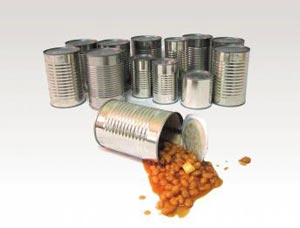
According to a report by the Can Manufacturers Institute (CMI) in conjunction with PACK EXPO, Americans continue to favor traditional packaging, including metal cans, instead of pouches and newer packaging in their food and beverage Purchases.

This report was based upon telephone interviews of 1,000 respondents who considered metal cans to be the safest of all containers. The study also revealed that busy consumers want future packaging to be simple, easy to use and convenient. This further reinforces the fact that all of the recent innovations in metal packaging and not only overwhelmingly applauded by consumers, it shows that the metal can remains one of the most economical, environmentally friendly and safest packaging format.

Traditional Metal Packaging still preferred by consumers

88% of the survey respondents favored traditional packaging such as metal cans, plastic and glass bottles and jars over pouches and paperboard packaging. There is also a perception by consumers that metal packaging is best at keeping nutrients without preservatives.

90% of survey respondents cited food safety and tampering as major concerns as that the metal can was the most tamper evident packaging followed by glass containers, plastic containers, paperboard packaging and the pouches used in packaging.

Robert Budway, CMI president proudly announced that "This packaging trends report captures a moment in time," and that "The metal-packaging industry is in the midst of a dynamic change with breakthrough innovations easy-to-use containers with twist-tops, resealable metal lids, pull-tab lids and peelable opening systems representing an exciting new chapter in the venerable food can's 200-year life." He went on to say "Increasingly convenient packaging methods and rising recycling rates highlight the new focus of the metal-can industry: improving the ease of consumers' lives and protecting the environment around them."

Cans have been on of the most successfully recycled component of packaging

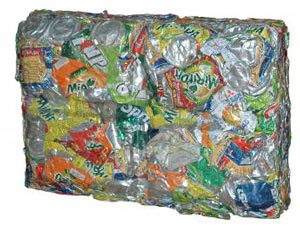
Cans have been on of the most successfully recycled component of packaging for many years now and my own experience has shown me that people who are not normally "recyclers" more of then that not at least recycle cans so it was not surprising to me that 86% of the packaging survey respondents listed metal cans as recyclable over paperboard and pouches.

I had the pleasure of spending hours discussing packaging and the evolution of packaging with two extremely well known packaging industry distribution insiders and our combined experience in the packaging field exceeded 50 years.

In both interviews the topic of cycles of evolutions in rigid packaging was disused at length. Metal cans for aerosol came up in one interview, and metal packaging for food and beverage played an important role in the second interview. Both insiders perspective clearly showed that while individual metal packaging components have changed - especially an aerosol packaging, metal packaging is still an integral part of their business and they expect that metal will continue to be so based upon their customers demand for traditional packaging.

Labels: , , ,

Thursday, September 08, 2005

Good Job Alcan!

Alcan Inc. announced today that it is donating 500,000 to the American Red Cross to assist in relief efforts following the devastation caused to the U.S. Gulf coast by hurricane Katrina last week even though Alcan does not currently have any facilities in the affected region.

"On behalf of Alcan, our deepest sympathies and prayers go out to the families and friends of the victims, in particular those who are part of our family. At present, many Alcan retirees and at least one employee were directly impacted by the hurricane," said Travis Engen, President and Chief Executive Officer of Alcan Inc. "Tens of thousands of people have lost everything: family, friends, homes, jobs. It is reassuring to see the global community unite and collectively assist the survivors to rebuild their lives," he added.

Ironically, Alcan operated a cable plant until 2003 in Bay St. Louis, Mississippi, which is a town that was virtually flattened by Katrina. This facility is one of the few buildings to have not been completely destroyed by Katrina and is being used in the relief effort. Alcan has also stated that they are monitoring developments in the region and continuing to assess additional means of providing assistance.

Alcan, not only a leader in packaging, a company setting a good example!

Labels: , ,

Thursday, July 14, 2005

Alcan selling plastic bottle business

Alcan wants to explore the sale of its food plastic business and of Alcan's plastic bottle business have been put on notice.

Alcan a worldwide packaging leader plans to sell the plastic bottles business as part of an ongoing restructuring of its food packaging operations in order to concentrate its food business on the more profitable flexible packaging market.

Since world demand for converted flexible packaging is forecast to grow by about seven per cent to $53.5bn this year (see PackagingBlog article US flexible packaging demand to decrease) this looks like a logical move for Alcan to make.

Alcan's plastic bottles packaging business has plants in both North America and Europe and in 2004 had sales of $130m. The entire Alcan plastic bottles packaging business employs a total of 495 people. The Alcan plastic bottles packaging unit provides a range plastic bottles for products such as juice, energy drinks, coffee beverages, teas foodservice, and infant formula. They also manufacture both hot and cold fill containers that are used for condiments such as ketchup, salsa, pasta sauces, cheese sauces, syrups, relish, fruit, jams and jellies and salad dressings.


The President of Alcan's food packaging business in North America, Ilene Gordon was quoted as saying "This business is a leader in its field, pioneering multi-layer bottle technology for hot- and cold-fill products," said the. "We are confident that we can find a strategic buyer that will be attracted to the growth and profit potential of the business, as well as by its commitment to providing customers with top-tier quality and service."

Alcan has been both expanding and restructuring its packaging division since 2002. The significant growth they have experienced has mostly been a result of acquisitions such as Algroup in 2000, VAW Packaging (FlexPac) in 2002 and Pechiney Packaging in 2003.

Through these and other acquisitions Alcan controls a substantial position in European, Americas and Asian flexible packaging markets. The packaging division expanded manufacturing capacity in Poland, Russia, China and Malaysia in early 2005. In Europe Alcan's packaging business has plants in the France, Germany, Czech Republic, Italy, Ireland, the Netherlands, Portugal, Poland, Russia, Switzerland, Spain and the UK.

Alcan now supplies the food, pharmaceuticals, medical, health and beauty aid, and tobacco markets with food and beverage packaging currently represents 62 per cent of sales in the packaging division.

The entire Alcan food group manufactures packaging for dairy products, pet food, fresh and frozen food, beverages, shrink bags, retorted food, dry food, and snacks.

"Our food packaging business is moving strategically to focus greater resources on the flexible packaging market, where we already enjoy substantial scale and leadership positions and where we believe the most attractive growth opportunities lie," said the president and chief executive officer of Alcan Packaging, Christel Bories.

Alcan is a leader in both the packaging and aluminum markets and has 70,000 employees and operations in 55 countries. Alcan’s packaging business alone had revenues of $6.1bn in 2004. The plastic packaging accounts for 59 per cent of the division’s business, while aluminum makes up 26 per cent.

Labels: , , ,

Thursday, July 07, 2005

US flexible packaging demand to decrease

US demand for flexible bulk packaging is expected to decelerate to 3.4 per cent growth per year with about 60 per cent of the demand to be for plastic flexible bulk packaging.

A researcher for the Freedonia Group a market research firm who conducted this study stated "Nonetheless, overall advances will benefit from healthy outlooks for manufacturing and retail activity. Products offering a combination of cost benefits and increased performance efficiency are expected to see the best growth, often supplanting a variety of alternative formats, both flexible and rigid."

The fastest growth is expected to in both the film wrap and flexible intermediate bulk containers (FIBCs) market. The higher demand for plastic shipping sacks and plastic strapping will outpace the industry average, all of this at the expense of paper and steel packaging producers.

Plastic shipping sack packaging demand is expected to be driven mostly by the agricultural and horticultural market.

30 per cent of total flexible bulk packaging demand in 2004 was for Film wrap, which will remain a growth segment of the industry.

FIBC's low cost, versatility and performance for the shipping and storage of bulk dry flowable products is very attractive to manufactures. The demand for FIBC is expected to expand 5.6 per cent annually through 2009. This increased demand is strongly influenced by the popularity of home centers, club stores and other mass retailers and the ever growing requirements for the bundling and protection of goods during warehousing and distribution.

Labels: , , ,